Not all pipelines are created equal — but most teams treat them as if they are.
Context
Most recruiting teams treat sourcing channels as interchangeable — post everywhere, review everything, hire whoever clears the bar. The assumption is that more volume equals more options. In practice, it means more noise, slower decisions, and recruiter fatigue.
The Problem
When every channel looks the same on a dashboard, it's impossible to know where recruiter time is actually creating value. Inbound volume feels productive but hides poor signal. Outbound and referrals get treated as nice-to-have rather than the highest-converting channels in the funnel.
- Recruiters spending the majority of their time triaging low-signal inbound applications
- No baseline for what a healthy source mix looks like
- Leadership pushing for more job board spend without evidence it converts
What We Did
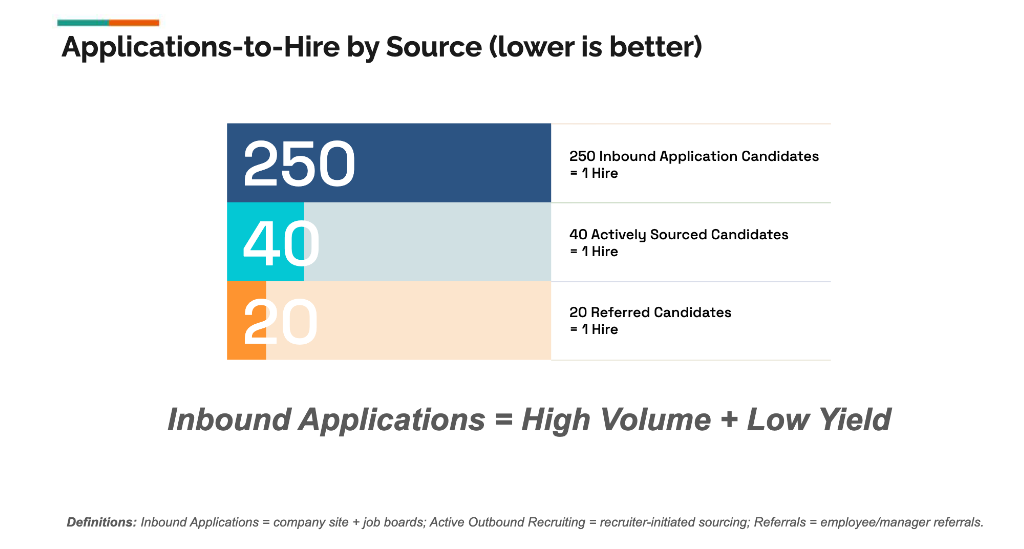
We mapped candidates-per-hire by source channel using historical hire data. Rather than tracking volume, we tracked conversion — how many candidates from each source were needed to produce one hire. The analysis covered inbound applications, recruiter-sourced outbound, and referrals across a consistent role family to make the comparison clean.
Impact
The data made the channel differences impossible to ignore.
| Source | Candidates per Hire | Signal Quality |
|---|---|---|
| Inbound | ≈ 250 | Very high volume; low average signal. |
| Outbound / Sourced | ≈ 40 | Curated profiles, stronger alignment. |
| Referrals | ≈ 20 | Highest intent and cultural fit. |
- Recruiter time rebalanced away from inbound triage toward targeted outbound
- Low-performing job board spend identified for reduction
- Referral program investment justified with conversion data
Why It Matters
Source quality analysis turns a budget and time-allocation argument into a data conversation. When hiring managers and leadership can see the conversion gap, the discussion shifts from "post more jobs" to "invest in the channels that work."
Run this quarterly to rebalance recruiter specialization, channel investment, and sourcing strategy against actual conversion data — not activity volume.
Let's Connect
Open to roles in People Analytics, Talent Intelligence, People Ops, and Recruiting Operations — especially teams building internal AI capabilities.